
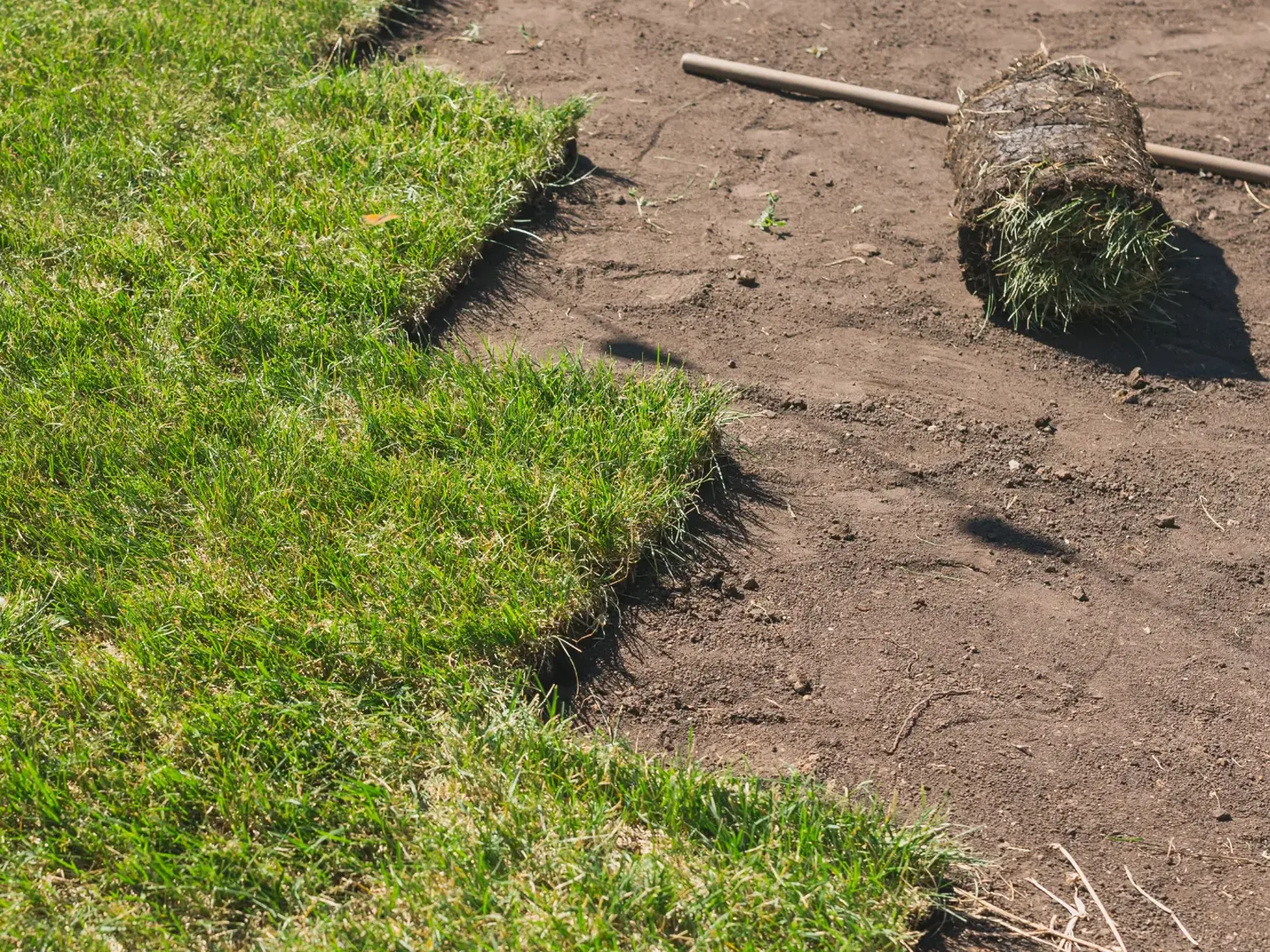
New Lawns Laidon Prepared Groundin King's Lynn
A level, healthy lawn that roots in quickly, because the ground is cleared, graded and prepared before a single roll goes down.
5.0 from 6 Google reviews · Free, no-obligation quotes
15 years' experience
Owner-run by Ed
Trust a Trader
Registered member
Insured & guaranteed
Public liability + workmanship guarantee
Quotes in ~1 week
Free site visit first
Turfing in West Norfolk
A fresh lawn, properly prepared
A new lawn can change how you use a garden: giving children somewhere to play, making space for a table and chairs, or replacing a worn patchwork with a more even green area. Turfing is the process of preparing the ground and laying rolls of established grass to create that usable surface. The visible turf matters, but the soil beneath it matters just as much. If the base is uneven, compacted or full of old roots, a new lawn can inherit the same problems as the one it replaces.
Fines Landscaping & Building Services carries out turfing in King's Lynn and across West Norfolk and Fenland. Ed has 15 years' experience and works with a small team of one or two regular subcontractors. The service suits homeowners replacing an old lawn, improving a newly built garden, or bringing a neglected area back into use. Builders and self-builders may also need turf laid after other garden or groundworks are complete. Ed can work from your own ideas; garden design is a separate, chargeable service.
Turfing is worth considering when grass has become thin, heavily worn or difficult to maintain, or where building work has left bare ground that needs finishing. It can also be a practical choice when a garden needs to look established sooner than a lawn grown from seed would allow. A site visit is useful because the right preparation depends on the existing ground, access, levels and size of the area. These are checked before the work is specified, rather than guessed from a photograph.
Professional installation focuses on the parts that are easy to overlook: removing unsuitable growth, preparing a consistent surface, checking levels and fitting the turf closely. Poor groundwork can leave bumps, gaps, soft patches or turf that struggles to establish. Ed provides a free site visit and quote, then explains the work needed for your particular garden. Most jobs are fixed-price after assessment; where the specification is not defined, a day-rate option may be appropriate. The aim is a lawn with a sound start and a tidy handover, with care advice suited to the work completed.
What goes wrong
Why the preparation matters
A lawn can look acceptable on day one and still disappoint if the surface beneath it was rushed. Common shortcuts tend to show up later as uneven ground, weak growth or extra work to put things right.
Laying over poor ground
Turf laid over compacted or unsuitable soil may struggle to root evenly. Simply covering old grass or weeds can allow them to return through the new lawn. Removing or preparing what is already there takes time, but skipping it can mean paying for turf and then having to repeat the job.
Ignoring levels
Small dips and ridges become obvious once the grass is cut or the lawn is used. Water can collect in low spots, while raised edges are more exposed to wear. Checking levels during preparation helps the finished lawn sit naturally with paths, patios and boundaries.
Leaving gaps between rolls
Loose joints and poorly fitted edges can dry out and leave visible seams. Turf needs close, consistent contact with the prepared surface. Rushing to cover the area without checking each run can turn a straightforward finish into a patchy one.
Underestimating clearing and access
Old vegetation, uneven ground and restricted access all affect the work involved. Homeowners sometimes allow for the turf itself but not the removal and preparation needed first. A site assessment identifies those factors before the quote, reducing the risk of avoidable changes later.
Treating new turf as established
Freshly laid turf needs time and suitable aftercare before it can be treated like a mature lawn. Heavy use too soon can disturb the joints and surface. Ed can explain the practical care required at handover so the new grass has a better chance to settle in.
Our process
How your turfing job runs
1
1. Free site visit and measure-up
Ed visits to look at the lawn area, current ground, levels and access, and to understand how you want to use the space. The measurements and site conditions help define the preparation and turfing required.
2
2. Quote and specification
You receive a clear quote, usually within about a week depending on the diary. Most work is fixed-price after assessment; if the specification is not yet defined, a day-rate option can be discussed. Larger jobs may book several weeks ahead, with lead times varying by scale and season.
3
3. Ground preparation
The existing surface is cleared and the ground prepared to suit the garden. Edges and levels are considered alongside nearby paths and features, so the lawn fits the space rather than sitting as an afterthought.
4
4. Turf installation
The prepared area is finished and fresh turf is laid with attention to close joints, edges and a consistent surface. The approach is adjusted to the garden's shape and any fixed features.
5
5. Tidy finish and walk-round
The team tidies the site and walks the completed work with you. Ed explains care points and the workmanship guarantee, without implying a fixed guarantee duration.
What you get
Why it's worth doing properly
A quicker usable lawn
Turf gives the garden a green surface sooner than waiting for a lawn to grow from seed, subject to the size and condition of the area.
Safer, more even ground
Careful preparation and attention to levels reduce awkward ridges and dips that can catch feet or make mowing difficult.
A sound start
Clearing and preparing the surface before laying helps the turf make contact with the ground instead of hiding problems underneath.
Fewer remedial costs
A site assessment and clear specification help avoid paying to lay turf over ground that needs further work first.
Work planned around the garden
Ed considers access, edges and how the lawn meets existing features, helping the finished area feel part of the garden.
A tidy, explained handover
The team leaves the site tidy, completes a final walk-round and explains the care needed while the new grass establishes.
The detail
Turfing for different gardens
No two lawns begin with exactly the same ground or intended use. A site visit helps Ed identify what lies beneath the existing surface and agree a practical scope before work starts.
Preparing the ground
Preparation may involve removing old turf and unwanted growth, addressing the existing surface and bringing the area to suitable levels. The extent depends on what is found at the visit and whether previous work has left compacted or disturbed ground. A level lawn is not necessarily a flat lawn: it should sit appropriately with adjoining paths, thresholds and garden features.
Edges matter too. The lawn may meet paving, a border, a fence or a planting area, and those joins should be considered as part of the layout. Discussing how the garden is used helps Ed understand where a clear edge, access route or open run of grass is most useful. The quote sets out the agreed work rather than assuming every garden needs the same treatment.
Laying and finishing
Once the surface is ready, the turf is laid to follow the shape of the lawn, with attention to the fit between rolls and around obstacles. Narrow strips and irregular corners need particular care because gaps or loose edges can be more noticeable there. The goal is a close, even finish across the prepared area.
The final walk-round gives you a chance to see the completed edges and discuss any practical points. Fresh turf is not the same as an established lawn, so sensible use and care after installation are important. Ed can explain the appropriate next steps for the particular job rather than offering a one-size-fits-all promise about establishment.
Homeowners, builders and self-builders
For homeowners, turfing often completes a garden renovation or replaces lawn damaged by wear or building activity. Some customers already have a clear layout in mind; others want to talk through how to make the available space work. Fines can build to your own ideas. Garden design is available as a separate chargeable service and is not included as a free part of a turfing quote.
Groundworks and turfing can also be coordinated as part of domestic work or arranged as standalone services for builders and self-builders. If other work is still under way, discussing sequence and access at the site visit helps establish when turfing can sensibly take place. Any programme depends on the scope and is confirmed in the quote.
Local site conditions
Ed works in King's Lynn, Downham Market, Watlington, Hunstanton, Wisbech, Swaffham, Dersingham, Heacham, South Wootton and Terrington St Clement, across West Norfolk and Fenland. A local visit allows the actual garden, rather than a general assumption, to shape the proposal.
Access, existing levels and the amount of preparation required can vary from one property to another. The free visit and measure-up provide the basis for a transparent quote and realistic discussion of timing. Ed has 15 years' experience, is a Trust a Trader registered member and carries public liability insurance; subcontractors carry their own insurance. A workmanship guarantee is provided, with no stated duration.
Related services
Turfing across West Norfolk: turfing in King's Lynn, turfing in Downham Market, turfing in Watlington, turfing in Hunstanton, turfing in Wisbech, turfing in Swaffham, turfing in Dersingham, turfing in Heacham, turfing in South Wootton, turfing in Terrington St Clement - all areas we cover.
Turfing FAQs
Questions we get asked
How much does turfing cost in King's Lynn?
There is no single cost for every lawn. The area size, condition of the existing ground, access and preparation required all affect the work. Ed offers a free site visit and quote; most jobs are fixed-price after assessment. A day-rate option may suit work where the specification is not defined.
How long does a turfing job take?
It depends on size; the duration is confirmed in your quote. The amount of clearing and ground preparation, access and the shape of the lawn all influence the work involved. Larger jobs can book several weeks ahead, and lead times vary by scale and season.
What happens at the free visit?
Ed measures the area, checks the existing surface, levels and access, and talks through how you want the lawn to work. That information is used to set out the preparation and installation in your quote.
Do you guarantee turfing work?
A workmanship guarantee is provided, but no fixed duration is stated. At handover, Ed walks round the completed work with you and explains relevant care points for the new lawn.
How long will a new lawn last?
Its useful life depends on preparation, use and ongoing care, so no particular lifespan can be promised. Properly installed turf can provide a lasting lawn when it is looked after, but fresh grass needs time to establish before heavy use.
Do you cover Downham Market and West Norfolk?
Yes. Turfing is available in King's Lynn, Downham Market and surrounding areas including Watlington, Hunstanton, Swaffham, Dersingham, Heacham and South Wootton, as well as across West Norfolk and Fenland. Contact Ed to discuss your address.
Can you turf a garden after building work?
Yes. Turfing can be part of domestic work or arranged as a standalone service for builders and self-builders. The site visit helps establish what ground preparation is needed and when the area is ready for installation.
Get a fresh, even lawn started
Free site visit, a clear fixed quote, and a workmanship guarantee on the finished job. Rated 5.0 on Google and a registered Trust a Trader member.
Mon–Fri 7am–6pm · Sat 8am–4pm · Back to home