
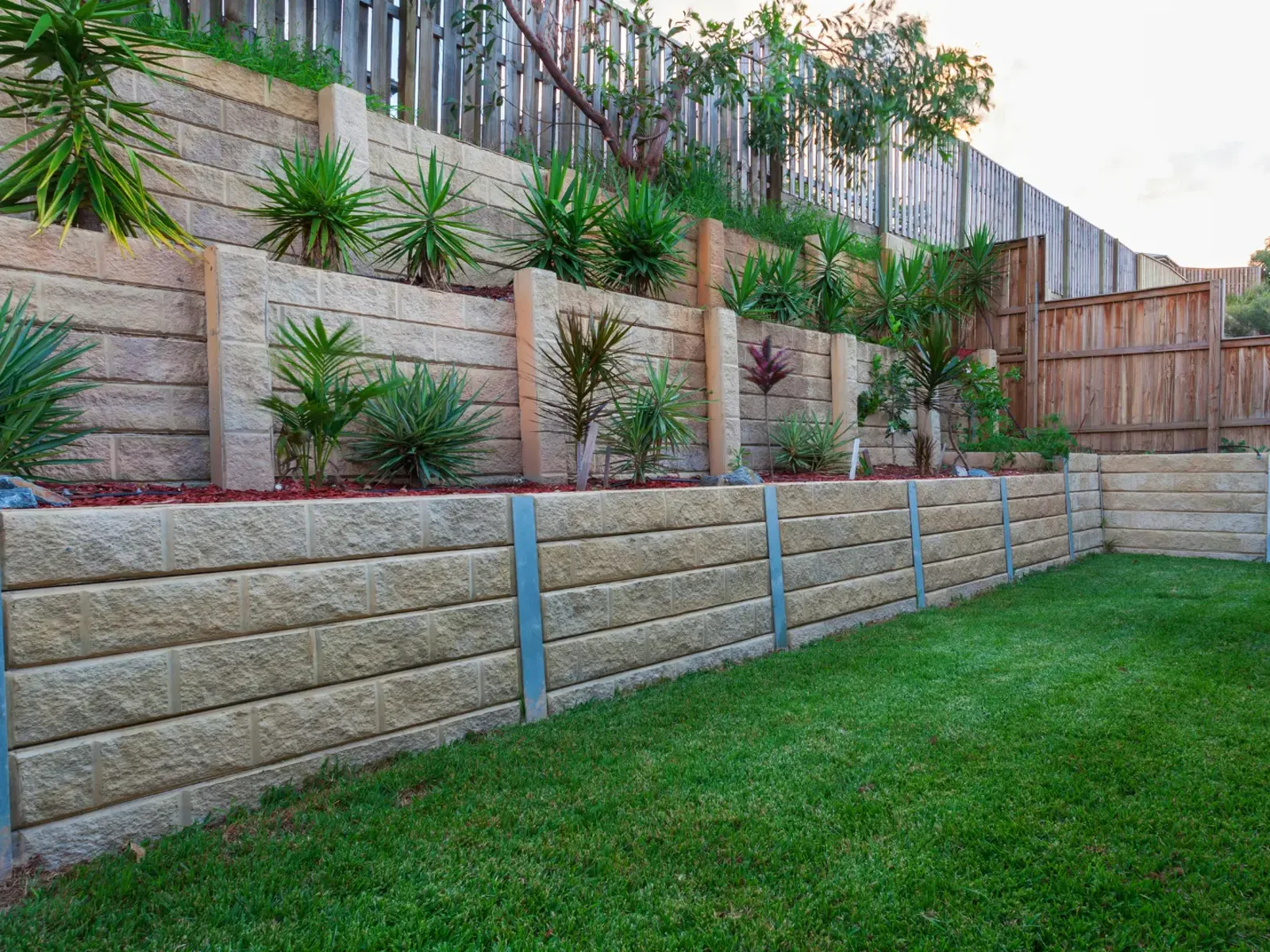
Retaining WallsBuilt for Sloping Gardensin King's Lynn
Turn awkward, sloping ground into usable level space with a wall built on proper foundations and drained so it holds for years.
5.0 from 6 Google reviews · Free, no-obligation quotes
15 years' experience
Owner-run by Ed
Trust a Trader
Registered member
Insured & guaranteed
Public liability + workmanship guarantee
Quotes in ~1 week
Free site visit first
Retaining Walls in West Norfolk
Retaining walls that make levels work
A retaining wall holds back ground where one part of a garden or site is higher than another. Done thoughtfully, it can make a sloping area easier to use, define a planting bed, support a terrace or create a clearer transition between different parts of the garden. Fines Landscaping & Building Services builds retaining walls in King's Lynn and across West Norfolk and Fenland. Ed has 15 years' experience and works with a small team of one or two regular subcontractors, depending on the job.
Retaining work is not simply a matter of building a wall to the height you can see. The ground behind it, the level difference, water movement, access and the way people will use the finished space all inform the project. A wall intended to retain soil has a different purpose from a decorative boundary wall, even if the finished surfaces might look similar. A site visit gives Ed the chance to see those conditions directly and discuss a suitable scope before quoting.
Homeowners may need a retaining wall when a slope limits where they can sit, play or plant, or when an existing wall shows movement or deterioration. Others are redesigning a garden and want a more usable level area. Builders and self-builders can also discuss related groundworks and drainage as standalone support or as part of domestic work. The right solution depends on the individual site, so the work begins with a conversation about what is changing and what the finished garden needs to do.
Ignoring a wall that is moving can allow a local problem to become a larger repair. Rebuilding without identifying why it moved risks repeating the same issue. Good preparation, clear setting out and attention to drainage are important parts of the job, not optional finishing touches. Ed offers free site visits and quotes; most defined projects are fixed-price after assessment, while day rates can be discussed when the specification is not yet defined.
What goes wrong
Small signs can point to a bigger issue
Retaining walls are affected by the ground they hold, water and how they were constructed. A crack or lean may be more than a cosmetic flaw, and patching the visible face can leave the cause untouched. Acting early allows the site to be assessed before the scope expands. During a free visit, Ed can discuss the condition, intended use and what needs to be included in a quote.
Leaning or bulging masonry
A wall that is visibly moving should be assessed rather than simply repointed or painted. The movement may relate to ground pressure, water or unsuitable construction. If it continues, sections may need more extensive rebuilding. A proper scope considers the wall and its surroundings so that corrective work responds to the problem rather than hiding it.
Water trapped behind the wall
Poorly considered water management can create pressure and contribute to dampness, staining or movement. Assuming water will drain away on its own is a common mistake, particularly where levels and surfaces direct run-off towards the structure. Drainage needs to be discussed in relation to the actual garden and incorporated into the agreed scope where required.
An unsuitable design for the level
A low garden boundary is not automatically suitable for retaining a bank of soil. Underestimating the level difference or the purpose of the wall can lead to cracking and movement. Before choosing a layout, establish how much ground is being held and what sits above it. Rebuilding later may involve more disruption than a considered plan from the outset.
Poorly prepared ground
Construction that begins without suitable preparation can settle unevenly or fail to meet the intended line and level. Rushing excavation and setting out can also affect adjoining paths, patios and planting. Preparation should be part of the plan and quote, not left vague until the team arrives. The visit helps reveal access and ground constraints in advance.
Delaying action on a damaged wall
A small crack or loose area may be easier to investigate before more of the wall becomes affected. Leaving visible movement unaddressed can increase the work required and complicate a garden redesign later. Avoid covering damage with a surface repair until the reason for it is understood; describe what you have noticed when you call Ed.
Our process
How your retaining walls job runs
1
1. Free site visit and measure-up
Ed visits to look at the level change, access, existing wall and surrounding ground. You can explain how you plan to use the space and what is concerning you. Measurements and a view of the site help identify the key questions for a realistic scope.
2
2. Fixed quote or day-rate option
Most jobs receive a fixed-price quote after the site assessment. If the specification is still undefined, a day-rate option may be appropriate. Quotes are usually provided within about a week, depending on the diary, and set out the agreed work so you can make an informed decision.
3
3. Ground preparation
The team prepares the area in line with the agreed scope, including the necessary groundworks and consideration of drainage. Levels and the work area are organised before construction begins. Careful preparation reduces avoidable changes during installation and gives the finished wall a better chance of performing as intended.
4
4. Retaining wall installation
The wall is built to the agreed layout and purpose, with attention to line, level and the surrounding garden. Ed keeps you updated as work progresses. If you want a change or additional work, discuss it with him so that the scope and any effect on the job can be agreed clearly.
5
5. Tidy site and final walk-round
Once work is complete, the site is tidied and Ed walks the finished area with you. You can check the agreed work and raise questions before handover. Workmanship is covered by a guarantee; ask Ed for its applicable duration and terms when arranging the quote.
What you get
Why it's worth doing properly
More usable ground
A carefully planned level change can help turn a difficult slope into a space with a clearer purpose, whether for planting, access or a place to sit.
A safer approach
The wall is assessed in relation to the soil it retains and how the area will be used, rather than treated as a decorative face alone.
Preparation built into the plan
Ground preparation and drainage considerations are discussed before work begins, helping the construction respond to the actual site.
Fewer expensive surprises
Measuring up and agreeing the scope first helps reduce the risk of setting out a wall that needs costly changes once installation is underway.
A dependable point of contact
Ed leads the work with a small regular team and keeps communication direct. Reviews note punctuality, politeness and transparent pricing.
A considered handover
A final walk-round lets you review the work and discuss upkeep. Workmanship is guaranteed; the relevant terms are confirmed directly with Ed.
The detail
Planning a retaining wall for your garden
A retaining wall should suit the difference in level, the site and the way you want to use the space. Fines Landscaping & Building Services starts with a free site assessment, then explains the work required and provides a quote. Ed works with homeowners and can also discuss groundworks and drainage for builders and self-builders.
Assessing the ground and levels
The visible height of a wall is only one part of the picture. The slope above it, the ground below, access for preparation and nearby surfaces can all affect the scope. At the site visit, Ed will measure the area and discuss the intended layout, existing structures and any symptoms you have noticed. This makes the quote specific to the location rather than based on an assumption.
If the wall is already moving, mention when you first noticed it and whether the appearance has changed. The visit is not a substitute for a formal engineering assessment where one is required, and no one should assume every situation has the same solution. A clear discussion helps establish the practical work and any further information needed before booking.
Drainage and preparation
Water needs to be considered alongside a change in level. Run-off, damp ground and the route water takes around a garden can influence how the work is planned. Drainage is available as standalone work for builders and self-builders and may also form part of domestic projects. The quote should clearly reflect whether and what preparation or drainage work is included.
Ground preparation happens before the wall is installed. The team organises the area and works to the agreed levels and layout, with access and adjoining features in mind. Skipping preparation to move straight to visible masonry can create problems later. When comparing proposals, ask what groundworks are included so the scope is clear and comparable.
New walls and replacement work
A new retaining wall may be part of a wider garden transformation, creating a terrace or supporting a more practical layout. The wall can be planned alongside patios, landscaping or other outdoor work, so the levels and routes make sense together. Ed also undertakes garden and retaining brickwork; discuss the materials and desired finish at the visit.
Replacing a failing wall starts with understanding the existing situation, not just reproducing its visible face. A fresh structure that repeats the same unsuitable arrangement could develop similar problems. The scope depends on the site and the work needed. Most jobs are fixed-price after assessment; a day rate can be discussed if the specification is not yet defined.
Homeowners, builders and self-builders
Homeowners can talk through a troublesome slope, a garden redesign or an existing wall that needs attention. The free site visit gives you a chance to explain what matters most: access, usable space, appearance or a combination. The quote is usually provided within about a week, depending on the diary, and confirms the work proposed.
Builders and self-builders can ask about standalone groundworks and drainage or brickwork support. Explain the project stage and the scope you need so the right pricing approach can be discussed. Timings depend on job size, season and the diary; larger work can book several weeks ahead. The expected duration of the job depends on size and is confirmed in your quote.
Related services
Retaining Walls across West Norfolk: retaining walls in King's Lynn, retaining walls in Downham Market, retaining walls in Watlington, retaining walls in Hunstanton, retaining walls in Wisbech, retaining walls in Swaffham, retaining walls in Dersingham, retaining walls in Heacham, retaining walls in South Wootton, retaining walls in Terrington St Clement - all areas we cover.
Retaining Walls FAQs
Questions we get asked
What does a retaining wall cost in King's Lynn?
The cost depends on the length and height, access, ground conditions, preparation, drainage requirements and finish. Ed offers a free site visit, then provides a fixed quote for most defined jobs. A day-rate option may suit work where the specification is not defined.
How long will a retaining wall take to build?
Duration depends on size and the work required; it is confirmed in your quote. Quotes are usually provided within about a week, depending on the diary. Larger jobs can book several weeks ahead, with lead times affected by season and scale.
What happens during a site visit?
Ed looks at the slope, levels, access, existing wall and surrounding ground, then discusses how you want to use the space. The visit and quote are free. It helps define what preparation and drainage considerations belong in the scope.
Is the work covered by a guarantee?
Workmanship is covered by a guarantee. Its duration is not stated here, so ask Ed to confirm the terms that apply to your project when you discuss the quote.
How long does a retaining wall last?
There is no guaranteed lifespan for every site. Service life depends on the construction, ground, water management, materials and ongoing conditions. Ed can discuss the work proposed for your property, but will not promise a fixed number of years.
Do you cover Downham Market and West Norfolk?
Yes. Fines works in King's Lynn, Downham Market, Watlington, Hunstanton, Wisbech, Swaffham, Dersingham, Heacham, South Wootton and Terrington St Clement, across West Norfolk and Fenland.
Can you include drainage or other garden work?
Drainage and groundworks can be discussed as part of domestic work or as standalone services for builders and self-builders. Related landscaping, patios and brickwork may also be relevant. Ed will confirm what is included in your specific quote.
How do I arrange a visit?
Call Ed on 07784 298600. Phone hours are Monday to Friday, 7am–6pm, and Saturday, 8am–4pm. Fines Landscaping & Building Services is a Trust a Trader registered member and has a 5.0 Google rating from 6 reviews.
Create a more usable garden level
Free site visit, a clear fixed quote, and a workmanship guarantee on the finished job. Rated 5.0 on Google and a registered Trust a Trader member.
Mon–Fri 7am–6pm · Sat 8am–4pm · Back to home